Finding a suitable job can be challenging, especially when you are exploring multiple vacancies, comparing job requirements and trying to understand which opportunities match your qualifications.
Sometimes, you may apply for several positions without receiving a response. In other situations, you may find vacancies that look interesting but require skills or experience you do not have.
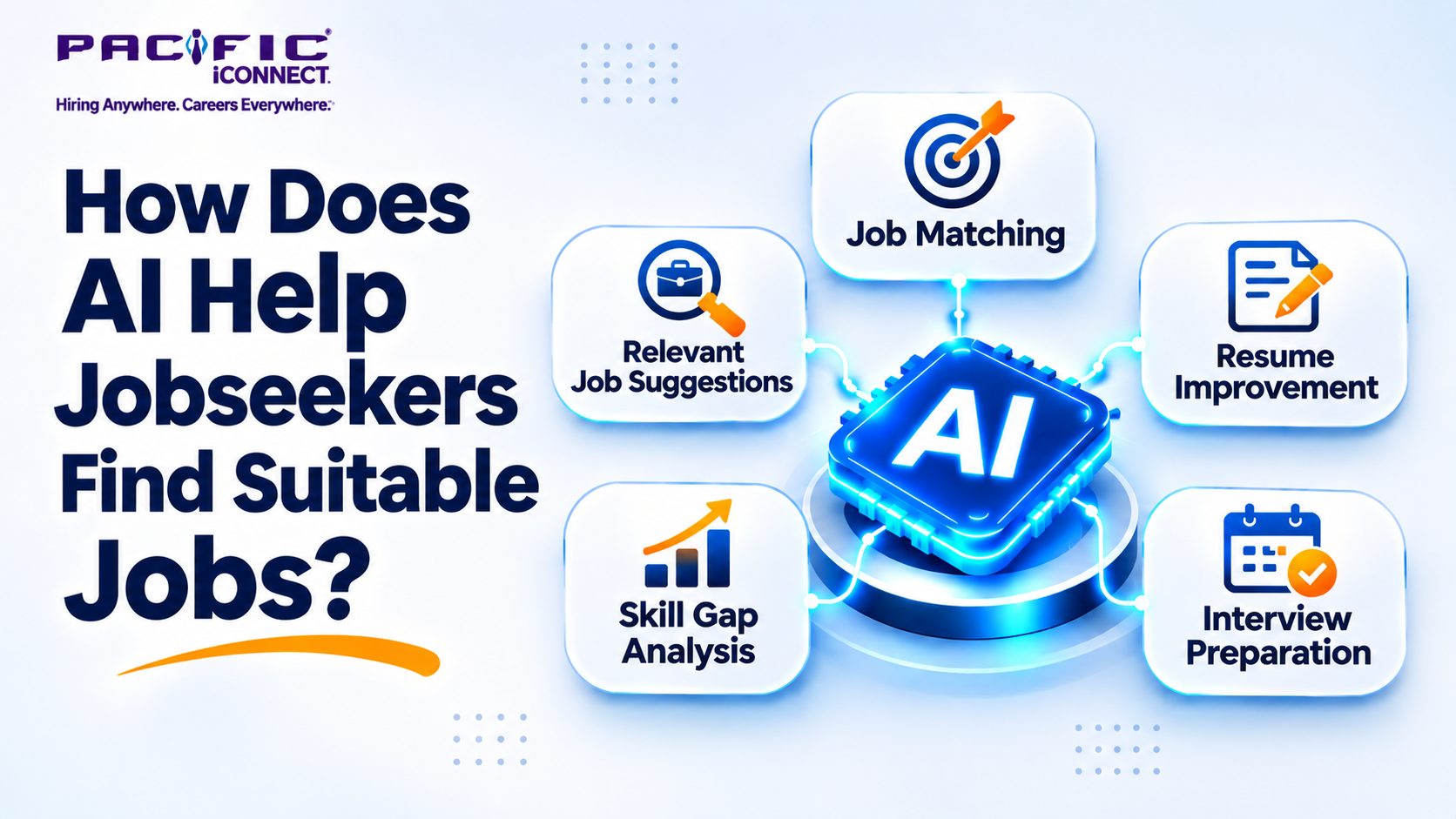
Artificial Intelligence (AI) is changing how job seekers search for employment. AI-powered tools can analyse professional profiles, suggest relevant vacancies, identify skill gaps and help candidates prepare better applications.
For job seekers in India, these tools can make the job search more organised and focused.
But how does AI actually help you find suitable jobs? Let's understand from a job seeker's point of view.
1. AI Helps You Discover Relevant Job Opportunities
One of the biggest advantages of AI in job searching is personalised job recommendations.
Traditional job searches often depend on entering specific job titles or keywords. AI-powered recommendation systems can analyse information such as your skills, qualifications, experience and job preferences to suggest potentially relevant vacancies.
For example, suppose you have completed your B.Com degree and have knowledge of Excel, accounting and financial documentation.
Instead of searching only for "Accountant Jobs", an AI-based recommendation system may help you discover related opportunities such as:
- Accounts Executive.
- Junior Accountant.
- Billing Executive.
- Finance Assistant.
- Back Office Executive.
- Accounts Payable Associate.
These recommendations can help you explore different job titles that may match your background.
However, always check the actual responsibilities and eligibility criteria before applying.
2. AI Can Match Your Skills With Job Requirements
Sometimes, you may not know whether your skills are suitable for a particular vacancy.
AI-based job-matching tools can compare the information in your profile with the requirements mentioned in job descriptions.
For example, if a company is looking for a customer support executive, the required skills may include:
- Communication.
- Problem-solving.
- Customer handling.
- Basic computer knowledge.
- Email writing.
If these skills are included in your profile, a matching system may identify the vacancy as relevant to your background.
This shows how AI can support job discovery by connecting candidate information with employment requirements.
3. AI Helps You Identify Missing Skills
You may find a vacancy that matches your career interests but notice that it requires additional skills.
Instead of ignoring the opportunity, you can use AI tools to understand what you need to improve.
For example, if you are interested in digital marketing jobs, you may already know social media management but need to improve your knowledge of:
- Search Engine Optimisation (SEO).
- Google Analytics.
- Content marketing.
- Keyword research.
- Digital advertising.
AI-based skill analysis tools can compare your existing skills with job requirements and highlight possible gaps.
Use these suggestions to prepare a realistic learning plan. You do not need to learn everything at once. Focus on the skills most relevant to your preferred career.
4. AI Can Help Improve Your Resume
Your resume is an important part of your job application. It should communicate your qualifications, experience and relevant skills clearly.
AI writing tools can help you improve your resume by:
- Correcting grammar and spelling.
- Improving sentence structure.
- Organising professional information.
- Creating a clear professional summary.
- Identifying relevant keywords from a job description.
- Making descriptions of genuine achievements more effective.
For example, if your resume says "Handled customer calls", an AI writing assistant may suggest a clearer version such as "Managed customer enquiries and provided information about products and services."
Always check the suggested wording before using it.
Do not add qualifications, achievements, job experience or skills that you do not actually have. Your resume must represent your real professional background.
5. AI Can Help Freshers Explore Suitable Career Options
Fresh graduates sometimes struggle to identify which jobs they should apply for.
They may have a degree but limited work experience and may not know which entry-level positions are suitable.
AI tools can help freshers explore possible job roles based on their educational qualifications, interests and existing skills.
For example:
Educational background
Possible job roles to explore
B.Com
Accounts Assistant, Billing Executive, Finance Assistant
BBA
HR Executive, Sales Executive, Business Development Associate
BCA
Technical Support Executive, Junior Developer, Software Tester
BA
Content Writer, Customer Support Executive, Administrative Assistant
B.Sc
Lab Assistant, Quality Control Trainee, Research Assistant
These are examples, not guaranteed career matches. Actual eligibility depends on the employer, job responsibilities and additional requirements.
AI can help you explore options, but you should research each role before deciding which career path to follow.
6. AI Can Help You Prepare for Job Interviews
Finding a suitable vacancy is only one part of your job search. Preparing for the interview is equally important.
AI tools can help you practise interview questions based on your target position.
For example, if you are applying for an HR executive position, you can ask an AI assistant to generate questions about:
- Recruitment and selection.
- Interview coordination.
- Employee documentation.
- Communication skills.
- Basic HR operations.
You can also practise answering questions such as:
- Tell me about yourself.
- Why are you interested in this position?
- What are your strengths?
- How do you handle workplace challenges?
- Why should we consider you for this role?
Try answering in your own words. AI-generated answers should be used for preparation, not memorised without understanding.
7. AI Can Help You Understand Job Descriptions
Some job advertisements include technical terms, unfamiliar responsibilities or specific skill requirements.
If you are unsure about a job description, an AI assistant can explain it in simpler language.
For example, a vacancy may mention responsibilities such as lead generation, CRM management, reporting and client coordination.
You can ask an AI tool to explain what these responsibilities mean and what skills may be required.
This can help you decide whether the position matches your qualifications and interests.
However, always refer to the original job advertisement for official responsibilities, salary details and eligibility conditions.
8. AI Can Make Your Job Search More Organised
Applying for multiple vacancies can become confusing when you do not maintain proper records.
AI tools and digital applications can help you organise your job search.
You can create an application tracker containing:
- Company name.
- Job title.
- Job location.
- Application date.
- Required qualifications.
- Interview schedule.
- Application status.
You can also use job alerts and recommendation features to discover new vacancies based on your preferences.
Keep your profile updated so that the recommendations you receive are more relevant.
9. Understand the Limitations of AI in Job Searching
Although AI can support your job search, it is important to understand that it is not perfect.
Here are some limitations to remember.
AI recommendations may not always be accurate: A suggested vacancy may not match your actual qualifications or career interests.
Some suitable jobs may be missed: A matching system may overlook relevant experience or transferable skills if they are not clearly mentioned in your profile.
AI-generated information may contain errors: Always verify resume suggestions, job descriptions and career advice.
AI cannot guarantee employment: Getting an interview or job offer depends on many factors, including employer requirements, competition, skills and interview performance.
Your personal information needs protection: Avoid uploading sensitive documents, passwords, OTPs or confidential information to untrusted AI platforms.
Use AI as a supporting tool while making your own career decisions.
10. How to Use AI Effectively During Your Job Search
To get useful results, provide AI tools with accurate information about your background and career goals.
Follow these practical steps:
Step 1: Understand your career interests
Identify the industries, job roles and locations you want to explore.
Step 2: Update your professional profile
Add your educational qualifications, work experience, skills and certifications accurately.
Step 3: Use relevant job search keywords
Search using specific job titles, skills and preferred locations.
Step 4: Review AI recommendations
Check whether suggested vacancies match your actual qualifications and interests.
Step 5: Identify skill gaps
Understand which additional skills may improve your suitability for your preferred roles.
Step 6: Improve your resume
Use AI suggestions to make your resume clearer while keeping all information truthful.
Step 7: Apply thoughtfully
Read the job description, verify the employer and submit applications for relevant opportunities.
How Pacific iConnect Can Support Your Job Search
Pacific iConnect provides digital features that can help job seekers organise their professional information and explore available opportunities.
Here are some features you can explore:
Build CV: Use the Build CV feature to prepare your CV and present your qualifications, skills and experience clearly.
Job Seeker Profile: Create a professional profile with relevant educational details, skills and employment information.
Location-Based Job Search: Explore available vacancies according to your preferred location and career interests.
These features can support your job search by helping you organise your information and discover opportunities.
Final Thoughts
Artificial Intelligence is becoming a useful part of the modern job search process. It can help job seekers discover relevant vacancies, understand job requirements, identify missing skills and prepare better resumes and interviews.
However, finding the right job requires more than relying on automated recommendations.
As a job seeker, focus on keeping your profile updated, developing relevant skills, checking job details and applying for opportunities that genuinely match your background.
Use AI to make your job search smarter and more organised, but let your own skills, preparation and decisions guide your career journey.